Having an anxiety disorder is like having that “feeling in the pit of your stomach that something isn’t quite right” just before something bad happens, except you feel it constantly
With the approval in the European Parliament of the
final text of the Copyright Directive, which will be definitely put to
the vote in a very few months’, the European Union has lost a historic
opportunity to produce copyright legislation adapted for the Internet in
the twenty-first century. What the European Parliament will finally
vote on is a technophobic text, tailor-made for the interests of the
copyright monopolies which, moreover, doesn’t guarantee the right of
authors to have a reasonable standard of living as a result of their
work.
If the law is eventually passed, it will be used for
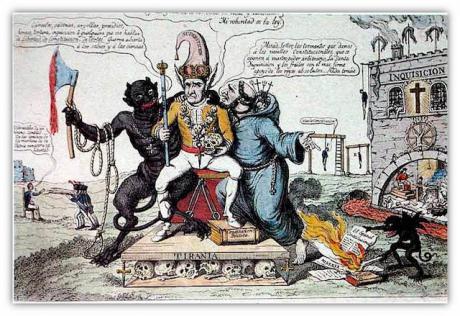
wholesale curtailment of freedoms and more censorship, in keeping with
the bizarre idea that anything that doesn’t produce hard cash for the major players– which doesn’t mean authors! – has to be prohibited and eliminated.
This is a tragedy for workers in the domain of
culture who (with a few, brave, and praiseworthy exceptions) have once
again been frivolously incapable of informing themselves about the real
state of affairs. They have passively swallowed the version fed to them
by their masters and, avidly playing the victim, have become the chief
mouthpiece of freedom-killing propaganda without the slightest
understanding that this is not going to enhance their rights but will do
away with the rights of everyone.
Alarm bells started ringing almost two years ago
when we discovered that, rather than being a proposal for an obsolete
copyright law, the directive is being used as a Trojan horse to
introduce surveillance, automatic data processing, government by opaque
algorithms, and censorship without court orders, etc.
This threat to such basic rights as freedom of
expression and access to culture and information lurks in ruses which
are mainly hidden in two articles of the Directive:
Article 11: no link without a license. Article
11, otherwise known as the “Linktax” article, has created a new
economic “right” for magnates of the written press. This ‘right’,
moreover, implies indefinitely restricting the possibility of citing the
press online.
If this seems absurd, arbitrary and
counterproductive, we invite you to read the proposal itself. This is an
ambiguous text, described by the jurist Andrej Savin as “One of the worst texts I have ever seen in my 23-year-long career as a law scholar.” Given
its muzzy formulation, the safest response for any platform will be not
to link to any media publication without explicit permission.
This perverse measure will be the equivalent, on a
European scale, to the “Google tax”, which is already in force in Spain
and Germany. Even its promoters were soon to regret it, when Google shut
down Google News in Spain after it was approved. The Google tax is
paradoxical and those responsible for initiating it know very well it
won’t work in Europe. For example, Xnet revealed that the big German
publishing company Alex Springer was paying itself – having linked up to
pay itself – in an outlandish pretence that “everything’s fine”.
Where are they trying to go with this? What sense is
there in this move by the press barons to push laws which prevent you
from linking up to their content, disseminating it, and commenting on
them? Is this just a mix of ignorance and greed, or something like
shooting yourself in the foot?
There is certainly something of this involved, but
we believe that this is a mix of ignorance and greed which, in the end,
means cutting off your nose to spite your face (when you’re trying to
damage someone else’s face). With laws like this, the press barons can
engage in legal harassment to the point of closing down social
aggregators and communities like Meneame or Reddit, eliminating any new
competitor, consolidating their monopoly, and thus becoming the lone
voice on the Internet, the only ones who speak. In short, they are
aspiring to become a new kind of television.
Article 13: no uploading content without a license. Platforms
– from medium-sized providers of services storing subject material
through to the giants of the Internet – will be considered responsible
for any copyright infringement committed by their users, and they are
bulldozed into taking preventive measures. In other words, this isn’t a
matter of eliminating content but directly preventing people from
uploading it.
Of course, nobody is forcing them to do anything.
They are simply being made responsible for material uploaded by their
users. It’s like a car salesman being held responsible for crimes
committed by people who buy his cars. This can only end up with
algorithmic upload filters being applied to absolutely everything or, in
other words, prior, automatic, and massive Internet censorship. This
can only end up with algorithmic upload filters being applied to
absolutely everything or, in other words, prior, automatic, and massive
Internet censorship.
Recently, YouTube prevented the pianist James Rhodes
from uploading one of his own videos in which he is playing Bach. This
kind of “error”, which always favours privatisation of the public
domain, is the everyday reality for all authors who use YouTube.
And this isn’t just about the “errors” that lead to
the privatisation of the public domain. It is about the difficulty or
impossibility of uploading on the Internet any kind of derivative work:
parodies, memes, remixes, fandom, satires, and so on or, in other words,
the very essence of culture, political freedom and freedom of
expression.
Repeating the Medieval Experience of the Invention of the Printing Press
This whole setup, which looks like a science-fiction
dystopia, an impossible attempt to lock the doors when the horse has
bolted, or an exaggeratedly grim prophecy being spread by concerned
activists, is already being implemented today on big platforms.
At present, there are two options:
The Spotify model
In this case, the platform would
acquire all national and international licences and then make all
contents available unidirectionally in such a way that users can’t
upload content. Even so, in the case of Spotify, one of the few giants
with the resources to do this today, paying the copyright monopolies has
raised its overheads so much that, despite its commercial success, its
medium-term sustainability isn’t guaranteed. If this is the situation of
Spotify, it’s not difficult to imagine what will happen to medium-sized
Internet companies.
This model has another defect which is obvious to
most artists. The amount of money the real authors receive in the end is
zero or almost zero. The amount of money the real authors receive in
the end is zero or almost zero.
TheFacebook/Google model
These new Internet monopolies refuse to share the
cake with the old copyright monopolies and therefore opt for
large-scale, automatic filtering of all content. They will find it
easier to adapt to Article 13 since now they will only need to apply the
filtering mechanisms before uploading takes place.
This technology, besides being opaque and exclusive,
is very expensive. Since it will be obligatory, it will also mean that
these giants are very unlikely to have competitors that have any chance
of prospering.
Google has spent approximately 100 million dollars
to create the technology that has so far enabled it to respond to
copyright claims coming in from only 1% of its users.
The effect which these arbitrary regulations will
have on free Internet conversation, on diffusion of culture and
information, and access to them will be devastating.
if u kill a bug that’s cool, i kill bugs all the time, but if a person says, “hey, i am going to be upset if you kill that bug, please let me take it outside,” and u respond by killing the bug just to hurt and ridicule them, i’ve got some bad news for you
ur a fucking asshole
this is it. this is the most controversial post i’ve ever made on tumblr dot com. i’m getting actual hate for this. people are arguing with this.
literally all i said was “don’t be purposefully malicious to hurt another person’s feelings, because if you do, that person will think you’re an asshole.” this is some grade school shit right here. this is kindergarten. god, this is pre-school. if you’re purposefully mean to people? you’re an asshole. you’re the bad guy. i get that you think you’re edgy and interesting, but actually you’re the most boring person on the planet.
i fucking hate all of you. you think you’re intellectually superior because you’re rude, but actually, you’re just rude. congratulations on letting everyone know that you’re a rude annoying asshole. god. you’re all four years old. i literally feel like i’m explaining the concept of ‘bullying’ to a class of four year olds right now.
Yesterday’s Copyright Office ruling
on when you are allowed to break DRM went further than any such ruling
in the DMCA’s 20-year history, and that’s swell, but when you drill into
the ruling, it’s still a flaming pile of garbage.
Section 1201 of the Digital Millennium Copyright Act bans breaking DRM,
even for lawful purposes: repairing your car, say, or installing
third-party apps on a phone, or using third-party ink in your printer.
Back when the DMCA was passed in 1998, everyone warned Congress that
this was an invitation to abusive behavior, but Congress decided the
best way to address this would be to tell the Copyright Office to hold
hearings every three years in which the public could ask for temporary,
limited exceptions to this rule (very limited exceptions: the
Copyright Office can grant you the right to bypass DRM to do something
legit, but can’t give anyone the right to make a tool to exercise that
right: you’re expected to hand-whittle your own Iphone or car
jailbreaking gadget, with no help from anyone else).
The Copyright Office likes to make these exceptions ridiculously narrow, with so many terms and conditions that you have to hire a lawyer just to figure out if they apply to you.
This year, the Electronic Frontier Foundation applied for a slate of
exceptions designed to get the lawyers out of the picture, making them
wide and clear enough that Americans could read the rules, figure them
out, and apply them.
And while the Copyright Office granted some really great exceptions for
repair, preservation, security research, and more – but larded these
exceptions with so much copyrightese that the average person is going to
struggle to figure out what they really permit.
EFF is suing the US government to kill Section 1201 of the DMCA altogether. It was a terrible idea in 1998 and it’s only gotten worse every day since.
Tyrannosaurus was not the most dangerous animal in the park. Having imprinted on its handler since infancy, the creature maintained a docile temperament all the way to adulthood, and indeed seemed to prefer feeding from its designated trough to pursuing prey. Its interactions with staff and guests showed at most a mild curiosity, and the only real terror the beast inspired was when it snuck up on trainers to sniff their hats.
The raptors were not the most dangerous animals in the park. Hollywood had greatly exaggerated their size, first of all, and while they had a mischievous streak (one individual in particular was fond of stealin zookeepers’ wallets), they were far from the hyper-intelligent murder lizards everyone expected. Their intelligence was less of the predatory sort and more the comical intelligence of a corvid, devoted mostly to play and caring for their fellow flock members.
The mosasaur was not the most dangerous animal in the park. Though it held no loyalty to the zookeepers, it had taken to training well enough, and would dutifully move to a specific section of the tank when signaled, giving the keepers space to carry out any business they needed to accomplish in its tank without fear of harm.
No, by far the most dangerous animal in the park was the Struthiomimus. Everyone expected it to be easy – what were these animals in pop culture beyond being fodder for the carnivores? Surely the bird-mimics couldn’t be much of a hassle. Sadly, they weren’t just any bird mimics.
No, in temperament, the Struthiomimus mimicked a swan.
Highly territorial and vicious to the bone, more keepers had suffering brutal beatings by the struthis than had been hurt by the rest of the park’s fauna combined. And when they learned to chew through the fences…
Well, let’s just say the Tyrannosaurus never experienced a more terrifying day in her life.
every time I use “they” to refer to a single gender-unknown person on Tumblr, another piece of my grammar-filled heart shatters, and the pieces scatter at the bottom of hell
“They” has been a singular pronoun for hundreds of years, you melodramatic dipshit.
well… actually… no… they is plural. people use they when they should use he, she, or it.
dense motherfucker, the pronoun “they” is an english equivalent for the third person indefinite singular and has been for literally centuries. it remains morphologically and syntactically plural therefore you don’t need to shit your little pantaloons at compromising your surely rock solid grammar rules.
i guarantee every fuckin time you’ve ever had to refer to a person of an unknown gender you’ve used “they” subconsciously. (“The post clerk gave me a message for you.” “Oh, what did they say?”) but you only have a problem with it when people specify it as a pronoun for themselves because you’re a shitlord i fuckin guess.
“Eche on in þer craft ys wijs.” (“Each one in their craft is wise.”) — [Wycliffe’s Bible], Ecclus. 38.35 (1382)[19]
“And whoso fyndeth hym out of swich blame, They wol come up…” Chaucer, “The Pardoner’s Prologue” of The Canterbury Tales (circa 1400)[20] quoted by Jespersen and thence in Merriam-Webster’s Concise Dictionary of English Usage.[21]
“Eche of theym sholde … make theymselfe redy.” — Caxton, Sonnes of Aymon (c. 1489)[22]“If a person is born of a … gloomy temper … they cannot help it.” — Chesterfield, Letter to his son (1759);[23] quoted in Fowler’s.[24]
“A person can’t help their birth.” — Rosalind in W. M. Thackeray, Vanity Fair (1848);[25] quoted from the OED by Curzan in Gender Shifts in the History of English.[26]
“Now nobody does anything well that they cannot help doing” — Ruskin, The Crown of Wild Olive (1866);[27] quoted in Fowler’s.[24]
“Nobody in their senses would give sixpence on the strength of a promissory note of the kind.” — Bagehot, The Liberal Magazine (1910);[28] quoted in Fowler’s.[29]”
* Additional examples, NOT presented chronologically:
“‘Tis meet that some more audience than a mother, since nature makes them partial, should o’erhear the speech.” — Shakespeare, Hamlet (1599)
“Every one must judge according to their own feelings.” — Lord Byron, Werner (1823),[44] quoted as “Every one must judge of [sic] their own feelings.”[45]
“Had the Doctor been contented to take my dining tables as any body in their senses would have done …” — Jane Austen, Mansfield Park (1814);[46][45]
“If the part deserve any comment, every considering Christian will make it to themselves as they go …” — Daniel Defoe, The Family Instructor (1816);[47][45]
“Every person’s happiness depends in part upon the respect they meet in the world …” — William Paley[48][45]
*
“In the 14th edition (1993) of The Chicago Manual of Style, the University of Chicago Press explicitly recommended using singular they and their, noting a “revival” of this usage and citing “its venerable use by such writers as Addison, Austen, Chesterfield, Fielding, Ruskin, Scott, and Shakespeare.”[106]
#
Like, spending literally one minute on the internet to confirm (or in this case, disprove) what you blindly *believed* was an actually fact would have saved you from embarrassing yourself in front of…how many notes does this post have now? Well, let’s just call it a staggeringly large number of people.
But at least you provided the internet with a valuable teaching moment.
A Faceless person sits at the table in the center of the room. They are shuffling cards, waiting for you to take your seat. They hum as they deal the hands. You are playing Go Fish.
As you play, you and the Faceless being speak of many things. You speak of knowledge of the near future, approaching events, some fortuitous and many most bleak. The conversation turns to talk of a greater event, the darkest hour yet to come.
The Faceless one comments this: ‘There are many beasts and horsemen in my stables. I have yet to decide which to unleash.’
You watch as features bubble up beneath the Faceless skin–the beginnings of a nose, lips, eyelids, a face protruding from a once smooth expanse. No longer Faceless, the devil stands up, shakes your hand, and makes to leave. It pauses just once, to call back into the room. ‘The cards are a gift.’
You look at the cards and they have changed. They are black, large, inscribed in a language you do not read but which the cards read to you. When the cards start speaking to you, you put them away in their box. Already too many things are unleashed in the world.
Tonight, you spoke with the devil.
The devil looked a lot like you.
there are a lot of shitposts i don’t remember writing but the fact i blocked this out complete is genuinely concerning to me
me sitting here two weeks before the midterm elections watching my twitter and tumblr feeds fill up w/ memes and discourse about how voting is useless and democrats aren’t gonna save us: uh guys? guys? hey guys? guys? you guys? guys? hey you guys? you guys? guys? uh guys? guys? guys? guys?
one of the most common tactics of the right isn’t to change who you vote for. they know that’s unlikely to work. it’s to do everything in their power to make sure you decide to stay home.
republican turnout wasn’t actually that high in the last election. democratic turnout was just fucking abysmal, because of attitudes like this.
“To be clear, women loudly protesting the confirmation of Kavanaugh are not a “mob,” and comparing Trump to thuggish autocrats is simple honesty. Trump seems not to understand that criticism of his policies and rhetoric is not the same as a president demonizing opponents, race-baiting and threatening democratic institutions. In his book, news accounts exposing his corruption, ineptitude and cruelty are on par with his insisting that neo-Nazi marches include some “fine people.” No, Trump’s level of vitriol and overt racism is unmatched by political opponents or past presidents. The president for three years has demonized the Clintons, accusing Hillary of negligent handling of national intelligence (funny that Trump communicates by unprotected cellphone as the Chinese and Russian intelligence listen in) and threatening to jail her. As for Obama, Trump was a prime purveyor of the racist birtherism nonsense, designed to delegitimize Obama and cast him as the “other” — a foreigner, a Muslim.”
Section 1201 of the Digital Millennium Copyright Act bans bypassing
“access controls” for copyrighted works – that is, breaking DRM.
This was stupid when the DMCA passed in 1998, and it only got stupider
since: back in 1998, DMCA 1201 was used to punish people who made
region-free DVD players or homebrew Sega Dreamcast games. Today, every
gadget has thousands of lines of copyrighted code, putting any “access
control” on the gadget within reach of the DMCA, which has led
manufacturers to claim that the DMCA gives them the right to decide who
can make software for your stuff, how you can use your stuff, and who
can fix your stuff. DMCA 1201 has been used to intimidate and even jail
security researchers who found defects in products with DRM, which means
that the people who want to warn you about problems with the gadgets
you trust can’t come forward without permission from the companies that
stand to lose money if the news gets out.
Every three years, the Copyright Office hears petitions for “use
exemptions” to the DMCA: these exemptions let you break DRM to engage in
some kind of legit activity, like jailbreaking a phone or conducting
security research.
This year, many groups petitioned the Copyright Office for a wide
variety of exemptions and the Copyright Office just published its detailed conclusions setting out which exemptions were granted, which ones were denied, and which ones were partially granted.
It’s an extremely encouraging document! The Copyright Office granted the
majority of exemptions, including key exemptions around the right to
repair and legal protection for security research. They did partially or
completely deny some vital petitions, unfortunately, including ones
related to jailbreaking media to make fair uses, and some related to
preserving old video games.
Encouraging as this all is, there is one important and infuriating
element to keep in mind: while the Copyright Office grants “use
exemptions,” it does not believe it has the right to make “tools
exemptions” – exemptions that would allow an expert to make a tool for
disabling DRM so that you can make the uses they’ve permitted you to
make. In other words, the Copyright Office says, “You’re allowed to
jailbreak your Iphone, but no one is allowed to give you an Iphone
jailbreaking tool, and if you make a tool for your own use you can’t
share it or even tell people how it works.”
That’s pretty weird, but the infuriating part is when you bring this up
with DRM advocates and the Copyright Office: they say, “Well, once the
law is out of the way, people will just figure it out.” In other words:
“DRM is actually kinda bullshit and people who want to get around it
will.” But if that’s the case, what is DRM supposed to be for? If any
“bad guy” (someone who doesn’t care about permission from the Copyright
Office) who wants to get around DRM can do so, who is the DRM supposed
to restrict?
That’s right: honest people. People who want to do legitimate
things, like fix their stuff, or format-shift their stuff, or just buy
some third-party ink and have it work with their printer. These are the only
people DRM works against (otherwise, granting “use exemptions” would be
pointless). If these people wanted to do things that broke the law –
like making infringing copies of Bluray movies – the law already allows
companies to punish them. DRM doesn’t exist to protect companies’
rights, it exists to let them invent new rights (the right to
decide which screen you can watch a movie on, for example), and then
make those rights legally enforceable, by adding illegal-to-remove DRM
to their products.